
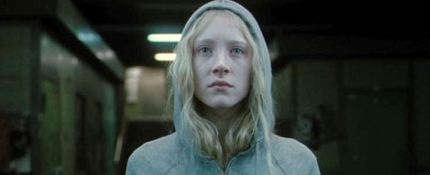



I'm galavanting in Vegas, so no Stained Glass Cinema this Sunday. Try to control your emotions.
And then...

Featured Posts


Aug 30, 2009


Aug 28, 2009
TGITDNMAR (8/28/09)
It's that time again for TGITDNMAR, which (obviously) stands for Thank God It's The Day New Movies Are Released.
I picked a great week to go out of town (fantasy football draft in Vegas time again - yay!). Me not being a horror buff and all, I'm friggin' thrilled that this happens to be the week that two crappy looking horror flicks (sequels, of course) are hitting theaters. As a bonus, the might've-been-interesting-but-getting-blasted Taking Woodstock isn't exactly getting rave reviews, either.
 Halloween II
Knowing that this series is (in one form or another) on its 10th film makes me somehow feel less hatred for George Luca$. What was great for a film or two has been stretched so thin that it seems like it's just the same movie coming out every three years. Hell, it might be - I haven't seen one since H:20. Is a guy that's by design lacking in personality really that strong of a character that he warrants 10 flicks?
Fletch's Chance of Viewing (in the theater): 0%
 Taking Woodstock
What happened to the career-blossoming that was supposed to happen to Paul Dano following There Will Be Blood? No, he's no Daniel Day-Lewis, but who is? He was great, and I figured we'd be seeing a lot more of him in prestige roles. Instead, I didn't even know he was in this (albeit from a prestige director in Ang Lee) until a few days ago. He's not the star, and if the trailer and his character name ("VW Guy") are any indication, it doesn't look like his role is even worth the time I've spent writing this paragraph. What a shame.
On the bright side, with Dano, star Demetri Martin, Imelda Staunton, Liev Schrieber, Eugene Levy, Emile Hirsch, Jeffrey Dean Morgan, and Dan Fogler on board, this has a very nice cast.
Fletch's Chance of Viewing: 22%
 The Final Destination
It would have been a lot funnier had they titled this THE Final Destination, to further drive the point home. Between this and the Fast & Furious naming, I see a new structure arising in Sequel Naming Land. Perhaps Hollywood, realizing that we're on to their "Franchise Name: Explainer" template, is just trying to stay a step ahead.
Unfortunately, I don't think they're fooling anyone. Fortunately, though, this gives me ample opportunity to dream up other potential sequel titles:
The Ice Age
The Iron Man
Harry Potter & Deathly Hallows
The Star Trek
The The Dark Knight
Harry Potter & Deathly Hallows: The Part II
The Pirates & The Carribean
Sex/City (or maybe The Sex)
The & Mummy
Ok, I give up.
Fletch's Chance of Viewing: 0%
And then...
I picked a great week to go out of town (fantasy football draft in Vegas time again - yay!). Me not being a horror buff and all, I'm friggin' thrilled that this happens to be the week that two crappy looking horror flicks (sequels, of course) are hitting theaters. As a bonus, the might've-been-interesting-but-getting-blasted Taking Woodstock isn't exactly getting rave reviews, either.
 Halloween II
Knowing that this series is (in one form or another) on its 10th film makes me somehow feel less hatred for George Luca$. What was great for a film or two has been stretched so thin that it seems like it's just the same movie coming out every three years. Hell, it might be - I haven't seen one since H:20. Is a guy that's by design lacking in personality really that strong of a character that he warrants 10 flicks?
Fletch's Chance of Viewing (in the theater): 0%
 Taking Woodstock
What happened to the career-blossoming that was supposed to happen to Paul Dano following There Will Be Blood? No, he's no Daniel Day-Lewis, but who is? He was great, and I figured we'd be seeing a lot more of him in prestige roles. Instead, I didn't even know he was in this (albeit from a prestige director in Ang Lee) until a few days ago. He's not the star, and if the trailer and his character name ("VW Guy") are any indication, it doesn't look like his role is even worth the time I've spent writing this paragraph. What a shame.
On the bright side, with Dano, star Demetri Martin, Imelda Staunton, Liev Schrieber, Eugene Levy, Emile Hirsch, Jeffrey Dean Morgan, and Dan Fogler on board, this has a very nice cast.
Fletch's Chance of Viewing: 22%
 The Final Destination
It would have been a lot funnier had they titled this THE Final Destination, to further drive the point home. Between this and the Fast & Furious naming, I see a new structure arising in Sequel Naming Land. Perhaps Hollywood, realizing that we're on to their "Franchise Name: Explainer" template, is just trying to stay a step ahead.
Unfortunately, I don't think they're fooling anyone. Fortunately, though, this gives me ample opportunity to dream up other potential sequel titles:
The Ice Age
The Iron Man
Harry Potter & Deathly Hallows
The Star Trek
The The Dark Knight
Harry Potter & Deathly Hallows: The Part II
The Pirates & The Carribean
Sex/City (or maybe The Sex)
The & Mummy
Ok, I give up.
Fletch's Chance of Viewing: 0%
Aug 27, 2009

Aug 26, 2009
Familiar Face - Unknown Name #17 - Zeljko Ivanek
Call them what you want - character actors, "That Guy(s)," scene stealers - I don't care. This is a regular feature where I spotlight one performer, whether they be longtime veterans like J.K. Simmons or Barry Corbin, or a fresher face just making their way up the stardom ranks. For previous FF-UNs, click here.
Today's Familiar Face-Unknown Name:
 Zeljko Ivanek
Where You've Seen Him (high profile): If you've watched any TV in the last ten years, Ivanek's face is almost certainly familiar to you. Name a show and he's probably guest-starred and/or had a recurring role on it. A short role call includes: Damages, Heroes, The Mentalist, Numb3rs, Big Love, Law & Order, LOST, 24, The Practice, and Oz. He's also been featured in such prominent films as School Ties, Donnie Brasco, Black Hawk Down and Live Free or Die Hard.
Where You've Seen Him (not-so-high profile): On Broadway, where he's been a mainstay over the three-plus decades since he graduated from Yale and attended the London Academy of Music and Dramatic Art. He's no stranger to independent films, either, with roles in Lars von Trier's Dogville and Manderlay, as well as Dancer in the Dark, In Bruges and Julian Po.
Character Specialties: To be honest, though I respect his work, I've never really liked Ivanek all that much, and the reason is likely due to the types of roles he gets: he's often an unlikable prick. Overwhelmingly, he's a cop or FBI/CIA type, but any kind of stern authority figure seems to work. His follically-challenged head appears to be the guilty party here; the all-over-the-place Ivanek is just 52, but it seems like I've been watching him play "older" jerks for decades. Turns out I have; he was just in his 30s, being typecasted in roles that played older than his own age.
My favorite role: See above. It's hard to pick a favorite role when you don't like the characters. I recall reading an interview with Matt Damon (sorry, I have no source) where he called Ivanek the best actor working; as you might recall, Damon was in School Ties as well, prior to his becoming a star. Ivanek's role in the Brendan Fraser coming-of-age story is one of the larger film roles that I can recall, so I'll go ahead and pick that one. His character in that Dead Poets-feeling film was an anti-Robin Williams - a strict teacher that berated and harped on the children to the point of breakdown. Those beady eyes worked wonders.
Little Known Facts: As might imagine given his name, Zeljko was not born in the United States. He was born in the former Yugoslavia and was brought to the States with his parents when he was a small child.
His name is pronounced Zhel-ko Ee-Vah-nek.
On Wikipedia: http://en.wikipedia.org/wiki/%C5%BDeljko_Ivanek
On IMDb: http://www.imdb.com/name/nm0411964/
On Facebook: http://www.facebook.com/pages/Zeljko-Ivanek/49657054759
And then...
Today's Familiar Face-Unknown Name:
 Zeljko Ivanek
Where You've Seen Him (high profile): If you've watched any TV in the last ten years, Ivanek's face is almost certainly familiar to you. Name a show and he's probably guest-starred and/or had a recurring role on it. A short role call includes: Damages, Heroes, The Mentalist, Numb3rs, Big Love, Law & Order, LOST, 24, The Practice, and Oz. He's also been featured in such prominent films as School Ties, Donnie Brasco, Black Hawk Down and Live Free or Die Hard.
Where You've Seen Him (not-so-high profile): On Broadway, where he's been a mainstay over the three-plus decades since he graduated from Yale and attended the London Academy of Music and Dramatic Art. He's no stranger to independent films, either, with roles in Lars von Trier's Dogville and Manderlay, as well as Dancer in the Dark, In Bruges and Julian Po.
Character Specialties: To be honest, though I respect his work, I've never really liked Ivanek all that much, and the reason is likely due to the types of roles he gets: he's often an unlikable prick. Overwhelmingly, he's a cop or FBI/CIA type, but any kind of stern authority figure seems to work. His follically-challenged head appears to be the guilty party here; the all-over-the-place Ivanek is just 52, but it seems like I've been watching him play "older" jerks for decades. Turns out I have; he was just in his 30s, being typecasted in roles that played older than his own age.
My favorite role: See above. It's hard to pick a favorite role when you don't like the characters. I recall reading an interview with Matt Damon (sorry, I have no source) where he called Ivanek the best actor working; as you might recall, Damon was in School Ties as well, prior to his becoming a star. Ivanek's role in the Brendan Fraser coming-of-age story is one of the larger film roles that I can recall, so I'll go ahead and pick that one. His character in that Dead Poets-feeling film was an anti-Robin Williams - a strict teacher that berated and harped on the children to the point of breakdown. Those beady eyes worked wonders.
Little Known Facts: As might imagine given his name, Zeljko was not born in the United States. He was born in the former Yugoslavia and was brought to the States with his parents when he was a small child.
His name is pronounced Zhel-ko Ee-Vah-nek.
On Wikipedia: http://en.wikipedia.org/wiki/%C5%BDeljko_Ivanek
On IMDb: http://www.imdb.com/name/nm0411964/
On Facebook: http://www.facebook.com/pages/Zeljko-Ivanek/49657054759
Aug 25, 2009
Tuesday's Twelve Tags #34 - The Rambler Edition
Greetings all - - -
This is Justin, (or in the blogger world, The Rambler) the resident winner of this here game of Fletch's. The saying must be true: "Ask and you shall receive." I put together one of these little puzzles on my own and got the great Fletch's permission to place it on his blog. The instructions are the same and are as follows:
Last week's winner: Me, I guess, with 12 points.
The theme: There were two, because of Fletch's new twist. The first was that each film in Group A included a member of the Baldwin family in it (I got that one) while the second group was filled with movies where the music was composed by Mutato Musika, a.k.a. Devo (BD79).
Here's the new dozen. The rules are simple: I'm going to give you a dozen taglines, all you have to do is name as many flicks that they belong to as you can. One point per tag. Try very hard to resist the Google. Get the most points and you win. In addition, there will always be a theme, though it's point worth will vary according to how difficult I think it is.
And I'm sticking with the old school game, with 12 tags and one theme. The theme, I think, is relatively easy, so we will make it worth 5.5 points. That's right. A half of a point. Deal with it!
As you get them right, I'll mark them as gotten and stuff. Good luck.
Standings
Justin - 10
Nick - 5.5
Jess - 4
J.D., BD79 - 2.5
Shane, Jason Soto - 2
Sea_of_Green, Kyle, Nic Cage - 1
Dead Pan - .5
THE TAGLINES:
1. The One Thing That Could Bring Them Together Is Revenge.
2. Life is more than the sum of its parts.
3. How do you lock the terror out... when you already invited it in?
4. Even cops dial 911
5. The true story of a real fake.
6. Life's greatest adventure is finding your place in the circle of life.
7. Down these mean streets a man must come. A hero born, murdered, and born again.
8. A comedy about life at the top, as seen from the bottom.
9. Watch What Happens
10. Get ready for human's biggest discovery ever!
11. Nothing is as big as your first love.
12. Get ready to rock!
Correct answers so far:
1. Serving Sara (Jess)
2. Transamerica (J.D.)
3. Single White Female (J.D.)
4. S.W.A.T. (bd79)
5. Catch Me If You Can (Ceri)
6. The Lion King (Fletch)
7. The Spirit (Jess)
8. The Nanny Diaries (J.D.)
9. The Truman Show (elgringo)
10. Contact (bd79)
11. Little Manhattan (Jess)
12. The Rock (Jess)
Theme - All the films feature an actor or actress who starred in a television show created by Aaron Sorkin (bd79)
And then...
This is Justin, (or in the blogger world, The Rambler) the resident winner of this here game of Fletch's. The saying must be true: "Ask and you shall receive." I put together one of these little puzzles on my own and got the great Fletch's permission to place it on his blog. The instructions are the same and are as follows:
Last week's winner: Me, I guess, with 12 points.
The theme: There were two, because of Fletch's new twist. The first was that each film in Group A included a member of the Baldwin family in it (I got that one) while the second group was filled with movies where the music was composed by Mutato Musika, a.k.a. Devo (BD79).
Here's the new dozen. The rules are simple: I'm going to give you a dozen taglines, all you have to do is name as many flicks that they belong to as you can. One point per tag. Try very hard to resist the Google. Get the most points and you win. In addition, there will always be a theme, though it's point worth will vary according to how difficult I think it is.
And I'm sticking with the old school game, with 12 tags and one theme. The theme, I think, is relatively easy, so we will make it worth 5.5 points. That's right. A half of a point. Deal with it!
As you get them right, I'll mark them as gotten and stuff. Good luck.
Standings
Justin - 10
Nick - 5.5
Jess - 4
J.D., BD79 - 2.5
Shane, Jason Soto - 2
Sea_of_Green, Kyle, Nic Cage - 1
Dead Pan - .5
THE TAGLINES:
1. The One Thing That Could Bring Them Together Is Revenge.
2. Life is more than the sum of its parts.
3. How do you lock the terror out... when you already invited it in?
4. Even cops dial 911
5. The true story of a real fake.
6. Life's greatest adventure is finding your place in the circle of life.
7. Down these mean streets a man must come. A hero born, murdered, and born again.
8. A comedy about life at the top, as seen from the bottom.
9. Watch What Happens
10. Get ready for human's biggest discovery ever!
11. Nothing is as big as your first love.
12. Get ready to rock!
Correct answers so far:
1. Serving Sara (Jess)
2. Transamerica (J.D.)
3. Single White Female (J.D.)
4. S.W.A.T. (bd79)
5. Catch Me If You Can (Ceri)
6. The Lion King (Fletch)
7. The Spirit (Jess)
8. The Nanny Diaries (J.D.)
9. The Truman Show (elgringo)
10. Contact (bd79)
11. Little Manhattan (Jess)
12. The Rock (Jess)
Theme - All the films feature an actor or actress who starred in a television show created by Aaron Sorkin (bd79)
Aug 23, 2009
Stained Glass Cinema Sunday (#56)
Better late(r) than never, right?

Standings:
J.D. - 11
Fletch - 9
Wendymoon - 5
Clive Dangerously - 4
Jason/Daniel, Nick - 3
Evan Derrick, Jason Soto, David Bishop, BD79 - 2
Steel11Kane, TonyD, Luke Harrington, Rachel, Adam Ross, Justin, Anders, Dreamrot, Dave, JLG, Big Mike Mendez - 1
Here are the altered/actual posters from last time:


And then...

Standings:
J.D. - 11
Fletch - 9
Wendymoon - 5
Clive Dangerously - 4
Jason/Daniel, Nick - 3
Evan Derrick, Jason Soto, David Bishop, BD79 - 2
Steel11Kane, TonyD, Luke Harrington, Rachel, Adam Ross, Justin, Anders, Dreamrot, Dave, JLG, Big Mike Mendez - 1
Here are the altered/actual posters from last time:


Aug 21, 2009

TGITDNMAR (8/21/09)
It's that time again for TGITDNMAR, which (obviously) stands for Thank God It's The Day New Movies Are Released.
 Inglorious Basterds
By all accounts, I should be anticipating this much more than I currently am. Tarantino? Check. Pitt? Check. ???
Perhaps it's those question marks that are leaving me wanting more. Eli Roth is annoying. Diane Kruger can't act her way out of a plastic bag. There's pretty much no one else of note involved. The plot...let's just say I'm finding it a bit thin. And I'm no fan of torture porn, even when the torture is being performed on Nazis.
So basically, what we're left with is a case of STYLE vs. substance. Like 300, only without the CGI effects and homoeroticism. I'm sure I'll see it, but it'll be done moreso out of loyalty to QT than anything else.
Fletch's Chance of Viewing (in the theater): 63%
 Post Grad
I'd barely heard of this prior to today.
I'd like to keep it that way. You probably would, too.
Fletch's Chance of Viewing: 0%
And then...
 Inglorious Basterds
By all accounts, I should be anticipating this much more than I currently am. Tarantino? Check. Pitt? Check. ???
Perhaps it's those question marks that are leaving me wanting more. Eli Roth is annoying. Diane Kruger can't act her way out of a plastic bag. There's pretty much no one else of note involved. The plot...let's just say I'm finding it a bit thin. And I'm no fan of torture porn, even when the torture is being performed on Nazis.
So basically, what we're left with is a case of STYLE vs. substance. Like 300, only without the CGI effects and homoeroticism. I'm sure I'll see it, but it'll be done moreso out of loyalty to QT than anything else.
Fletch's Chance of Viewing (in the theater): 63%
 Post Grad
I'd barely heard of this prior to today.
I'd like to keep it that way. You probably would, too.
Fletch's Chance of Viewing: 0%
Aug 20, 2009
Fletch's Film Review: The Goods: Live Hard, Sell Hard
 It would be too easy to give you a standard, boring review where I tell you all about the hits and misses of The Goods; where and when it flies (not often) and where it sinks (often), how it relates to its theatrical cousin Step Brothers and any of the other Will Ferrell/Adam McKay productions. It'd be like me writing my name; so simple that I could do it without thinking, upside-down and blind-folded.
So I'm not going to do that. No, you expect Insider Insight™ from Blog Cabins, so that is what I shall bring you. Why would I write a simple review when I can get inside the actors' heads and tell you what their reaction to the film was.
This will blow your mind more than Hurricane Bill and Hurricane Ted put together.
 Name: Jeremy Piven
Role: Don Ready, he sells cars, motherf*cker
Reaction: "My fake hair has never looked better. Booyah, bitches!"
 Name: Ving Rhames
Role: Jibby Newsome, a key member of Don's team
Reaction: "This is awesome. I'm surrounded by naked women all day and they let me wear my own wardrobe. I dread the day that idiot Cruise calls me up to play boring ass Luther for the fourth damn time."
 Name: David Koechner
Role:
Reaction: "I wonder if I'll ever get to stop playing the sidekick. What's our next movie about, Will?"
 Name: James Brolin
Role: Ben Selleck, the dealership owner that calls on Don's services
Reaction: "Eat sh*t, Josh."
 Name: Kathryn Hahn
Role: Babs Merrick, possibly pedophiliac sex kitten and eye candy member of Don's team
Reaction: "Finally, people might notice me. Well, my boobs, at least."
 Name: Ed Helms
Role: Paxton Harding, douchier version of Bradley Cooper's Wedding Crashers role
Reaction: "It's about time I get to play a jerk. So sick of being the nerd..."
 Name: Ken Jeong
Role: Teddy Dang, token Asian-American, picked on for being so
Reaction: "Did you know that Fletch and I are Facebook friends? Our relationship is more meaningful than my role in this movie."
 Name: Jordana Spiro
Role: Ivy Selleck, Ben's daughter/unbelievable love interest
Reaction: "Who am I, and why am I the lead love interest in a major motion picture? Oh, that's right - I'm the highly sought-after star of some TBS sitcom or something. I knew that."
 Name: Alan Thicke
Role: Stu Harding, Paxton's also-evil dad
Reaction: "Can you believe that the only difference between me circa Growing Pains and me circa right now is a few gray hairs? I look fandamntastic. Eat sh*t, Brolin."
 Name: Matt Walsh
Role: Captain Ortiz, apparently a pilot
Reaction:"What the hell happened to my role? Did you seriously cut me out and leave Ian's role in?" [Editor's note: Matt was referring to his old Upright Citizen's Brigade co-star Ian Roberts, who has a small role.]
Fletch's Film Rating:

"Whatever."
LAMBScore:

Aug 18, 2009
Tuesday's Twelve Tags #33
Last week's winner: Tag monster Jess, with 10 points.
The theme: Each film contained a rabbit somewhere in it. (BD79)
Here's the new dozen. The rules are simple: I'm going to give you a dozen taglines, all you have to do is name as many flicks that they belong to as you can. One point per tag. Try to resist the Google. Get the most points and you win. In addition, there will always be a theme, though it's point worth will vary according to how difficult I think it is.
New new twist (again!): I was given a great idea by part-time commentor Farmacy to partition the 12 tags into groups of three, with a theme for each. Leads to a bigger overall theme value while not necessarily making the theme-getter an automatic winner. Also means I don't have to find a theme that crosses 12 films, which can be difficult sometimes. I like it, though I'm gonna divide the tags into two sets of six for starters. Theme values will still vary by difficulty. Still with me? Like the changes? I hope so.
Group 1
1. Things Are Gonna Get Hairy!
2. They'll do anything to save their best bud.
3. For the most cautious man on Earth, life is about to get interesting.
4. The sport made him a Legend. His heart made him a Hero.
5. From the master of terror comes a new breed of evil.
6. Joint Custody Blows.
Theme value: 5 points
Group 2
7. He doesn't play golf... he destroys it.
8. The battle between the good and the bad is bound to get ugly.
9. It's not the same old bull.
10. Only a jackass would fix the Special Olympics
11. They're not really criminals, but everybody's got to have a dream.
12. It's happening so fast.
Theme value: 7 points
As you get them right, I'll mark them as gotten and stuff. Good luck.
Standings
Justin - 9
Nick - 5.5
Jess - 5
J.D., BD79 - 2.5
Shane, Jason Soto - 2
Sea_of_Green, Kyle, Nic Cage - 1
Dead Pan - .5
Correct answers so far:
1. Cats and Dogs (Justin)
2. Half Baked (Nic Cage)
3. Along Came Polly (BD79)
4. 8 Seconds (Justin)
5. Vampires (Nic Cage)
6. The Squid and the Whale (Justin)
Theme - Each film contains a Baldwin brother. (Justin)
7. Happy Gilmore (Nick)
8. Drop Dead Gorgeous (Justin)
9. The Adventures of Rocky and Bullwinkle (Justin)
10. The Ringer (Nick)
11. Bottle Rocket (Nic Cage)
12. Thirteen (Justin)
Theme -
And then...
The theme: Each film contained a rabbit somewhere in it. (BD79)
Here's the new dozen. The rules are simple: I'm going to give you a dozen taglines, all you have to do is name as many flicks that they belong to as you can. One point per tag. Try to resist the Google. Get the most points and you win. In addition, there will always be a theme, though it's point worth will vary according to how difficult I think it is.
New new twist (again!): I was given a great idea by part-time commentor Farmacy to partition the 12 tags into groups of three, with a theme for each. Leads to a bigger overall theme value while not necessarily making the theme-getter an automatic winner. Also means I don't have to find a theme that crosses 12 films, which can be difficult sometimes. I like it, though I'm gonna divide the tags into two sets of six for starters. Theme values will still vary by difficulty. Still with me? Like the changes? I hope so.
Group 1
1. Things Are Gonna Get Hairy!
2. They'll do anything to save their best bud.
3. For the most cautious man on Earth, life is about to get interesting.
4. The sport made him a Legend. His heart made him a Hero.
5. From the master of terror comes a new breed of evil.
6. Joint Custody Blows.
Theme value: 5 points
Group 2
7. He doesn't play golf... he destroys it.
8. The battle between the good and the bad is bound to get ugly.
9. It's not the same old bull.
10. Only a jackass would fix the Special Olympics
11. They're not really criminals, but everybody's got to have a dream.
12. It's happening so fast.
Theme value: 7 points
As you get them right, I'll mark them as gotten and stuff. Good luck.
Standings
Justin - 9
Nick - 5.5
Jess - 5
J.D., BD79 - 2.5
Shane, Jason Soto - 2
Sea_of_Green, Kyle, Nic Cage - 1
Dead Pan - .5
Correct answers so far:
1. Cats and Dogs (Justin)
2. Half Baked (Nic Cage)
3. Along Came Polly (BD79)
4. 8 Seconds (Justin)
5. Vampires (Nic Cage)
6. The Squid and the Whale (Justin)
Theme - Each film contains a Baldwin brother. (Justin)
7. Happy Gilmore (Nick)
8. Drop Dead Gorgeous (Justin)
9. The Adventures of Rocky and Bullwinkle (Justin)
10. The Ringer (Nick)
11. Bottle Rocket (Nic Cage)
12. Thirteen (Justin)
Theme -
Aug 17, 2009
Fletch's Film Review: District 9
 You know how it's said that we now live with a 24-hour news cycle? I'm fairly certain that the criticism cycle runs even faster.
A film is released, brought to us by a famous, well-respected director. It takes place in a faraway, exotic (to North Americans, anyway) land. It tells a story that features many familiar concepts, yet takes such an angle that it feels exponentially fresher than its contemporaries. As a result, it receives nearly unilateral praise, with some even (gasp!) intimating that it is worthy of Best Picture consideration.
(A short) time passes. More and more see the film. Soon, detractors speak up. They claim that this film is superficial; its exotic locale merely hypnotizing its non-exotic audience from seeing the numerous flaws contained within. Its politics are flawed, its praise unwarranted. It is clearly overrated, if not altogether stupid.
As you might have guessed, I'm not talking about District 9 above, but rather Danny Boyle's Slumdog Millionaire. While I'm not personally advocating a Best Picture nomination for District (though I did for Slumdog), the rest of the analogy remains intact. And damnit, I'm sick of this crap.
It's easy (and acceptable) to hate on movies like Transformers, G.I. Joe, and anything with Mummy in or near the title. They have no aspirations beyond a) entertaining their audiences and b) making sh*ttons of money, not necessarily in that order. They are not deep, and they typically feature subpar acting, which, when admitted to by the actors, seems to implausibly be covered by the media as if the man were biting the dog. At the same time, despite our low, low expectations, they seem to continually let us down. All we ask for is an action movie with a brain, with a pulse, with a clue. We want Blade Runner and Children of Men and The Matrix and Back to the Future. But what do we do when we get one, such as District? We immediately declare it an overrated piece of hackwork. We pick nits as if nit picking were going out of style. We ignore all that is good and original about it in favor of its flaws and its predictability. Basically, we do our best to sh*t on it as fast and as good as we can, because, after all, dissenting opinions are waaaay more popular than the ones that go with the flow.
Don't believe me? Just go to Rotten Tomatoes' D9 page, sort by how many comments there are for the reviews, then tell me how many of the top 10 results are for Fresh ratings as opposed to Rotten ratings. I tell you what - I'll save you the trouble: the answer is two. Two of the top ten are for positive reviews; what's funnier is that even that number is flawed, given that one of those two happens to be the most famous critic alive right now (Roger Ebert). Even then, he only cracked number 10 on the list.
Well, I guess I'm not one of the cool kids. I don't have a dissenting opinion. I stupidly thought that District 9 was the most original science-fiction film that I've seen since Neo faced off with Agent Smith 10 years ago. I thought District was fresh, engaging, funny, violent, brilliant (at times), flawed (at others), beautiful, ugly, intense, invigorating, well-acted, pretty well-directed, sometimes-confusingly shot, inventive, insanely frugal ($30 mil budget), action-packed, and all-around pretty goddamned good, and I can't wait to see it again.
Fletch's Film Rating:

"You're the best...around!"
P.S. - You know what? I probably am rating this a tad higher than even I think it deserves, but I really don't care. I guess I'm just as guilty of being a reactionary as anyone else.
P.P.S. - Crap, I almost forgot.
The Mrs. Fletch Memorial Shaky Cam Rating (go here for details if ya need 'em):

Post under
District 9,
film review
Aug 16, 2009
Stained Glass Cinema Sunday (#55)
Easy last week, harder this week...

Standings:
J.D. - 11
Fletch - 9
Wendymoon - 5
Clive Dangerously - 4
Jason/Daniel, Nick - 3
Evan Derrick, Jason Soto, David Bishop - 2
Steel11Kane, TonyD, Luke Harrington, Rachel, Adam Ross, Justin, Anders, Dreamrot, Dave, BD79, JLG, Big Mike Mendez - 1
Here are the altered/actual posters from last time:


And then...

Standings:
J.D. - 11
Fletch - 9
Wendymoon - 5
Clive Dangerously - 4
Jason/Daniel, Nick - 3
Evan Derrick, Jason Soto, David Bishop - 2
Steel11Kane, TonyD, Luke Harrington, Rachel, Adam Ross, Justin, Anders, Dreamrot, Dave, BD79, JLG, Big Mike Mendez - 1
Here are the altered/actual posters from last time:


Aug 15, 2009
Random thought: Really, Arnold?
I'm just sitting here watching Total Recall and the famous "Two weeks" scene is on, where Arnold's Douglas Quaid returns to Mars. Being a highly sought-after fugitive, he arrives wearing an intricate woman's head mask thing and a muumuu, so as to disguise his large frame.
He's asked a few questions by a customs agent (of sorts) regarding fruit being brought to the red planet and how long he's planning on staying. For reasons unbeknownst to us (read: major plot hole), his high tech mask/head that's also a bomb is inexplicably programmed to speak no more than two words - "two weeks," so that when that question about the fruit comes up, his answer makes him highly suspicious.
He repeats the line ad nauseum, more or less shorting out the entire mechanism, which leads us to the part where it's used as a bomb.
Being the forgiving moviegoer, I'm more than willing to overlook the retarded "two weeks" plot hole. However, as his costume malfunctions and he's repeating those words, drawing the attention of Michael Ironside's Richter, the following medium-range shot is shown:

Um, am I the only one seriously disturbed by this image? (If you'd like, click on it for a much larger view.)
I can understand it when a director dresses the extras around the main character in drab clothing and/or has the lead in a royal blue or fire engine red so as to have them stand out, but why the hell would director Paul Verhoeven allow Quaid - again, highly wanted fugitive - to arrive on Mars wearing a golden muumuu amidst a sea of travelers and customs agents wearing nothing but shades of gray, black and beige?
Douglas Quaid might have had his memory wiped, but he ain't stupid.
And then...
He's asked a few questions by a customs agent (of sorts) regarding fruit being brought to the red planet and how long he's planning on staying. For reasons unbeknownst to us (read: major plot hole), his high tech mask/head that's also a bomb is inexplicably programmed to speak no more than two words - "two weeks," so that when that question about the fruit comes up, his answer makes him highly suspicious.
He repeats the line ad nauseum, more or less shorting out the entire mechanism, which leads us to the part where it's used as a bomb.
Being the forgiving moviegoer, I'm more than willing to overlook the retarded "two weeks" plot hole. However, as his costume malfunctions and he's repeating those words, drawing the attention of Michael Ironside's Richter, the following medium-range shot is shown:

Um, am I the only one seriously disturbed by this image? (If you'd like, click on it for a much larger view.)
I can understand it when a director dresses the extras around the main character in drab clothing and/or has the lead in a royal blue or fire engine red so as to have them stand out, but why the hell would director Paul Verhoeven allow Quaid - again, highly wanted fugitive - to arrive on Mars wearing a golden muumuu amidst a sea of travelers and customs agents wearing nothing but shades of gray, black and beige?
Douglas Quaid might have had his memory wiped, but he ain't stupid.
Post under
random thoughts,
Total Recall
Aug 14, 2009
TGITDNMAR (8/14/09)
It's that time again for TGITDNMAR, which (obviously) stands for Thank God It's The Day New Movies Are Released.
I don't know who I should apologize to - you, Hollywood, the month of August? For years, I've railed against it (and February) as the perennial dumping ground, but then people saw G.I. Joe and said it wasn't terrible. They saw A Perfect Getaway and raved about it. Now this week, we've got the hotly-hyped and anticipated District 9, along with less anticipated (but still interesting to many, for varied reasons) films like The Time Traveler's Wife and The Goods. Throw Ponyo on there, too. And next week's Inglorious Basterds, and maybe even Taking Woodstock (hitting theaters 8/28). Could this be an actual, real slate of films for the eighth month?
Granted, this might have something to do with lowered expectations, but I'll take what I can get.
 The Goods: Live Hard, Sell Hard
As of rightthissecond, The Goods is getting blasted on Rotten Tomatoes, with a mere 17% freshness rating, with reviewers unafraid to bust out Cash for Clunkers references to the film's quality.
Ugh. I'm getting a very Strange Wilderness feeling to this. In case you don't recall, that's a very, very bad feeling.
Yet despite all that, I'm not sure if I can resist. Former Chappelle's Show writer Neal Brennan directs an all-star lineup of comedic actors that make me laugh, almost the least of which is star Jeremy Piven, who mostly just gets on my nerves these days with his one-trick pony act. Supporting him, however, is Ed Helms, David Koechner, Tony Hale, Rob Riggle, Gina Gershon, 80s TV vets Alan Thicke and James Brolin (wtf?), and last but certainly not least, my Facebook buddies Ken Jeong and Matt Walsh (as well as Walsh's former UCB partner Ian Roberts). Pretty sure Will Ferrell even makes an obligatory cameo.
There's a good chance it's awful. But there's a better chance that I need to find out for myself.
Fletch's Chance of Viewing (in the theater): 54%
 The Time Traveler's Wife
A large part of me looks at this and screams "Run away! Weepy chick flick!" But, to be honest, another part looks at it and says "This is actually an interesting concept...and besides, Ron Livingston and Stephen Tobolowsky are in it - how bad could it be?"
Take away the melodramatic aspects, and I do like what's going on here. Roles for women are so lame these days because they're always pushed to the side and not the central focus; here's a chance to take an interesting story and tell it from the woman's perspective. I don't see a theatrical viewing in my future, but I might like to catch this at some point in the future.
Fletch's Chance of Viewing: 8%
 District 9
You probably haven't heard about this, but this weekend is a record-setting one even before any of the box office totals come in. That's right - it's the first weekend with two films directed by guys named "Neil" to come out. Ever! Of course, there's an asterisk next to the record since one spells his name "Neal" and the other spells his "Neill," but historians are willing to overlook that minor nuisance. Anyway...big, big news, huh? This is the kind of Insider Insight™ that only Blog Cabins is capable of bringing you.
And oh yeah, this has been at or near the top of my Most Anticipated list ever since the first trailer appeared. Seeing it tonight.
Fletch's Chance of Viewing: 100%
 Ponyo
Ponyo
This might be fantastic, but I'm not about to kill my 13-year streak of not watching anime for some "goldfish princess" movie with a poster stolen from Finding Nemo.
Suck it, Ponyo. :D
Fletch's Chance of Viewing: 1%
And then...
I don't know who I should apologize to - you, Hollywood, the month of August? For years, I've railed against it (and February) as the perennial dumping ground, but then people saw G.I. Joe and said it wasn't terrible. They saw A Perfect Getaway and raved about it. Now this week, we've got the hotly-hyped and anticipated District 9, along with less anticipated (but still interesting to many, for varied reasons) films like The Time Traveler's Wife and The Goods. Throw Ponyo on there, too. And next week's Inglorious Basterds, and maybe even Taking Woodstock (hitting theaters 8/28). Could this be an actual, real slate of films for the eighth month?
Granted, this might have something to do with lowered expectations, but I'll take what I can get.
 The Goods: Live Hard, Sell Hard
As of rightthissecond, The Goods is getting blasted on Rotten Tomatoes, with a mere 17% freshness rating, with reviewers unafraid to bust out Cash for Clunkers references to the film's quality.
Ugh. I'm getting a very Strange Wilderness feeling to this. In case you don't recall, that's a very, very bad feeling.
Yet despite all that, I'm not sure if I can resist. Former Chappelle's Show writer Neal Brennan directs an all-star lineup of comedic actors that make me laugh, almost the least of which is star Jeremy Piven, who mostly just gets on my nerves these days with his one-trick pony act. Supporting him, however, is Ed Helms, David Koechner, Tony Hale, Rob Riggle, Gina Gershon, 80s TV vets Alan Thicke and James Brolin (wtf?), and last but certainly not least, my Facebook buddies Ken Jeong and Matt Walsh (as well as Walsh's former UCB partner Ian Roberts). Pretty sure Will Ferrell even makes an obligatory cameo.
There's a good chance it's awful. But there's a better chance that I need to find out for myself.
Fletch's Chance of Viewing (in the theater): 54%
 The Time Traveler's Wife
A large part of me looks at this and screams "Run away! Weepy chick flick!" But, to be honest, another part looks at it and says "This is actually an interesting concept...and besides, Ron Livingston and Stephen Tobolowsky are in it - how bad could it be?"
Take away the melodramatic aspects, and I do like what's going on here. Roles for women are so lame these days because they're always pushed to the side and not the central focus; here's a chance to take an interesting story and tell it from the woman's perspective. I don't see a theatrical viewing in my future, but I might like to catch this at some point in the future.
Fletch's Chance of Viewing: 8%
 District 9
You probably haven't heard about this, but this weekend is a record-setting one even before any of the box office totals come in. That's right - it's the first weekend with two films directed by guys named "Neil" to come out. Ever! Of course, there's an asterisk next to the record since one spells his name "Neal" and the other spells his "Neill," but historians are willing to overlook that minor nuisance. Anyway...big, big news, huh? This is the kind of Insider Insight™ that only Blog Cabins is capable of bringing you.
And oh yeah, this has been at or near the top of my Most Anticipated list ever since the first trailer appeared. Seeing it tonight.
Fletch's Chance of Viewing: 100%
 Ponyo
PonyoThis might be fantastic, but I'm not about to kill my 13-year streak of not watching anime for some "goldfish princess" movie with a poster stolen from Finding Nemo.
Suck it, Ponyo. :D
Fletch's Chance of Viewing: 1%
Aug 12, 2009
Poll results; new poll + A few words regarding Mrs. Fletch
You know, it's been a bad couple of weeks for Mrs. Fletch.
First, it was deemed that her car required a new air compressor (an absolute necessity in Phoenix's hellish climate). The cost of this versus the value of her car signaled to us that it was time for a new car. This was not all bad, however, as she is currently in love with her brand new roller skate (note: picture is not her actual car, just a representation of it).
But things were destined to get worse. The next setback, though, was brought on by her own poor decision making.
 Yes, I'm sure by now you're aware that she dared to speak ill of Road House. This resulted in my setting up a bonus poll last time out to see what you, the dear, dear readers of Blog Cabins thought of the late-80s comedy/action classic.
You didn't let me down. Despite her best efforts to recruit an anti-Dalton federation of voters, you chose to "Put that motherflippin' remote down" when Road House popped up on your TV. Let me never speak poorly of you again.
It didn't stop there, though.
A few days after the bonus poll was set up, we went to see The Hurt Locker. In case you don't recall from earlier reviews where I might have mentioned it, Mrs. Fletch gets terrible motion sickness at the movies. Or in the car. Or on a plane. Basically, just about any time she or a screen in front of her is in motion (except, strangely, on a boat, where she's fine). Remember that Star Tours simulation/ride at Disneyland? Yeah, she hates the hell out of it.
I don't envy her. If there's not a tripod, she's not a fan, and it doesn't help that we see a lot of indie films, where handheld cameras are all the rage, likely due to budgetary reasons. Well, The Hurt Locker, in case you haven't heard, is a serious offender in the realm of shaky cam-ness. Like, almost Blair Witch-level.
It might be too late to help her, but she had asked that when I posted that review that I include a warning to other potentially motion-sensitive folks out there on the dangers of the Locker. I forgot to, but promised to make up for that transgression. I have a two-pronged strategy for this; first, I vow to include the Mrs. Fletch's Memorial Shaky Cam Rating to all reviews in the future. This public service rating will be delivered in a 0-5 Dramamine scale, with the shakiest, most vomit-inducing films (like Locker) getting a Five Dramamine rating with less guilty offenders (say, Transformers) receiving perhaps a Three Dramamine and conventional, non-handheld works (Frost/Nixon, perhaps) in the zero range.
(Note: the rating will not be intended as a recommended dosage; I'm not positive, but I think taking five Dramamine will probably make you an awfully unhappy camper, if not an eternally sleepy one.)
Secondly, I present to you the Top Five Worst Shaky Cam Offenders (that we've seen). Since she doesn't know about this post, I'm making educated guesses on where Mrs. Fletch would place them. Before you mention them, we have not seen either Quarantine or [REC], but I hear they're pretty brutal, too:
5. Rachel Getting Married
4. The Bourne Ultimatum
3. The Hurt Locker
2. Cloverfield*
1. The Blair Witch Project
* Mrs. Fletch would likely pop up and say that she had no problems with Cloverfield, as she was wise and took some Dramamine beforehand, so I'm basing its rating on its shaky cam-ness relative to the others on the list.
 Oh, and in the other poll, 64% (!) of respondents said that they are the type that comes here and reads but never (or rarely) comments. I guess I should be surprised, then, that said respondents weren't too shy to vote.
Kidding. Comment or no, I appreciate you being here. I just appreciate the commenters a little bit more, since I know who they are and all, and am therefore able to know who I'm appreciating.
New poll is (belatedly) about John Hughes. I know, it's probably not terribly original right about now, but my curiosity must be satisfied. Having a hard time choosing and/or want to call out a top 3? Be my guest; after all, I'd love to vote for Uncle Buck, but I just can't. My Top 3 Hughes list looks like this:
3. The Breakfast Club
2. Uncle Buck (yeah, what of it?!)
1. Ferris Bueller's Day Off
Okay, this concludes the longest "poll results; new poll" post ever. Good day.
And then...
First, it was deemed that her car required a new air compressor (an absolute necessity in Phoenix's hellish climate). The cost of this versus the value of her car signaled to us that it was time for a new car. This was not all bad, however, as she is currently in love with her brand new roller skate (note: picture is not her actual car, just a representation of it).
But things were destined to get worse. The next setback, though, was brought on by her own poor decision making.
 Yes, I'm sure by now you're aware that she dared to speak ill of Road House. This resulted in my setting up a bonus poll last time out to see what you, the dear, dear readers of Blog Cabins thought of the late-80s comedy/action classic.
You didn't let me down. Despite her best efforts to recruit an anti-Dalton federation of voters, you chose to "Put that motherflippin' remote down" when Road House popped up on your TV. Let me never speak poorly of you again.
It didn't stop there, though.
A few days after the bonus poll was set up, we went to see The Hurt Locker. In case you don't recall from earlier reviews where I might have mentioned it, Mrs. Fletch gets terrible motion sickness at the movies. Or in the car. Or on a plane. Basically, just about any time she or a screen in front of her is in motion (except, strangely, on a boat, where she's fine). Remember that Star Tours simulation/ride at Disneyland? Yeah, she hates the hell out of it.
I don't envy her. If there's not a tripod, she's not a fan, and it doesn't help that we see a lot of indie films, where handheld cameras are all the rage, likely due to budgetary reasons. Well, The Hurt Locker, in case you haven't heard, is a serious offender in the realm of shaky cam-ness. Like, almost Blair Witch-level.
It might be too late to help her, but she had asked that when I posted that review that I include a warning to other potentially motion-sensitive folks out there on the dangers of the Locker. I
 forgot to, but promised to make up for that transgression. I have a two-pronged strategy for this; first, I vow to include the Mrs. Fletch's Memorial Shaky Cam Rating to all reviews in the future. This public service rating will be delivered in a 0-5 Dramamine scale, with the shakiest, most vomit-inducing films (like Locker) getting a Five Dramamine rating with less guilty offenders (say, Transformers) receiving perhaps a Three Dramamine and conventional, non-handheld works (Frost/Nixon, perhaps) in the zero range.
(Note: the rating will not be intended as a recommended dosage; I'm not positive, but I think taking five Dramamine will probably make you an awfully unhappy camper, if not an eternally sleepy one.)
Secondly, I present to you the Top Five Worst Shaky Cam Offenders (that we've seen). Since she doesn't know about this post, I'm making educated guesses on where Mrs. Fletch would place them. Before you mention them, we have not seen either Quarantine or [REC], but I hear they're pretty brutal, too:
5. Rachel Getting Married
4. The Bourne Ultimatum
3. The Hurt Locker
2. Cloverfield*
1. The Blair Witch Project
* Mrs. Fletch would likely pop up and say that she had no problems with Cloverfield, as she was wise and took some Dramamine beforehand, so I'm basing its rating on its shaky cam-ness relative to the others on the list.
 Oh, and in the other poll, 64% (!) of respondents said that they are the type that comes here and reads but never (or rarely) comments. I guess I should be surprised, then, that said respondents weren't too shy to vote.
Kidding. Comment or no, I appreciate you being here. I just appreciate the commenters a little bit more, since I know who they are and all, and am therefore able to know who I'm appreciating.
New poll is (belatedly) about John Hughes. I know, it's probably not terribly original right about now, but my curiosity must be satisfied. Having a hard time choosing and/or want to call out a top 3? Be my guest; after all, I'd love to vote for Uncle Buck, but I just can't. My Top 3 Hughes list looks like this:
3. The Breakfast Club
2. Uncle Buck (yeah, what of it?!)
1. Ferris Bueller's Day Off
Okay, this concludes the longest "poll results; new poll" post ever. Good day.
Aug 11, 2009
Tuesday's Twelve Tags #32
Last week's winner: Nic Cage, with 9 points (aw, how sweet that commentor Cage won, given my earlier post about the real Cage).
The theme: Each film features a member of the "12" from Ocean's Twelve - see above for who was in what. (Justin)
Here's the new dozen. The rules are simple: I'm going to give you a dozen taglines, all you have to do is name as many flicks that they belong to as you can. One point per tag. Try to resist the Google. Get the most points and you win. In addition, there will always be a theme, though it's point worth will vary according to how difficult I think it is.
New twist: due to the irresistability of the Google, I'm going to be upping the point values of the themes to offset the so-called cheating. Expect themes to be worth ~8 points on the low side and ~12 on the high side.
This week's theme is worth 9 points.
1. The Media Made Them Superstars.
2. A comedy beyond belief.
3. Sometimes It's Hard To Say No
4. A Magical Mystical Adventure
5. Some things in life just can't be explained.
6. What happens when make-believe believes it's real?
7. A world of wonders in One Great Picture
8. No mortal could possess it! No kingdom could command it!
9. On the other side of drinks, dinner and a one night stand, lies a terrifying love story.
10. A New Power Is Rising.
11. Makes Ben Hur look like an Epic
12. There are worlds beyond our own - the compass will show the way.
As you get them right, I'll mark them as gotten and stuff. Good luck.
Standings
Justin - 9
Nick - 5.5
Jess - 4
J.D., BD79 - 2.5
Shane, Jason Soto - 2
Sea_of_Green, Kyle, Nic Cage - 1
Dead Pan - .5
Correct answers so far:
1. Natural Born Killers (Jess)
2. Raising Arizona (Jess)
3. Sexy Beast (Jess)
4. Ladyhawke (Jess)
5. Phenomenon (Jess)
6. Pan's Labyrinth (Jess)
7. Alice in Wonderland (Jess)
8. Excalibur (Jess)
9. Fatal Attraction (Jess)
10. Lord of the Rings: The Two Towers (Jess)
11. Monty Python and the Holy Grail (Nick)
12. The Golden Compass (Nick)
Theme - Each film contains a rabbit somewhere in it. (BD79)
And then...
The theme: Each film features a member of the "12" from Ocean's Twelve - see above for who was in what. (Justin)
Here's the new dozen. The rules are simple: I'm going to give you a dozen taglines, all you have to do is name as many flicks that they belong to as you can. One point per tag. Try to resist the Google. Get the most points and you win. In addition, there will always be a theme, though it's point worth will vary according to how difficult I think it is.
New twist: due to the irresistability of the Google, I'm going to be upping the point values of the themes to offset the so-called cheating. Expect themes to be worth ~8 points on the low side and ~12 on the high side.
This week's theme is worth 9 points.
1. The Media Made Them Superstars.
2. A comedy beyond belief.
3. Sometimes It's Hard To Say No
4. A Magical Mystical Adventure
5. Some things in life just can't be explained.
6. What happens when make-believe believes it's real?
7. A world of wonders in One Great Picture
8. No mortal could possess it! No kingdom could command it!
9. On the other side of drinks, dinner and a one night stand, lies a terrifying love story.
10. A New Power Is Rising.
11. Makes Ben Hur look like an Epic
12. There are worlds beyond our own - the compass will show the way.
As you get them right, I'll mark them as gotten and stuff. Good luck.
Standings
Justin - 9
Nick - 5.5
Jess - 4
J.D., BD79 - 2.5
Shane, Jason Soto - 2
Sea_of_Green, Kyle, Nic Cage - 1
Dead Pan - .5
Correct answers so far:
1. Natural Born Killers (Jess)
2. Raising Arizona (Jess)
3. Sexy Beast (Jess)
4. Ladyhawke (Jess)
5. Phenomenon (Jess)
6. Pan's Labyrinth (Jess)
7. Alice in Wonderland (Jess)
8. Excalibur (Jess)
9. Fatal Attraction (Jess)
10. Lord of the Rings: The Two Towers (Jess)
11. Monty Python and the Holy Grail (Nick)
12. The Golden Compass (Nick)
Theme - Each film contains a rabbit somewhere in it. (BD79)
The definition of "Schadenfreude"

Boo! How'd you like to wake up with that picture in front of your eyes? I'd be asking for the sweet, sweet solace of death. Anyway, I'm not here to scare you with pictures of Nic Coppola, but rather to take joy in this news, from New Orleans' Times-Picayune:
"Actor Nicolas Cage may have more trouble selling his homes in New Orleans than most other people who have plunked for-sale signs in front of their houses.
That's because the Internal Revenue Service has placed a tax lien for $6.26 million on his properties for failing to pay income taxes in 2007. Another IRS lien for $360,545.84 stems from unpaid income taxes between 2002 and 2004.
The presence of the liens means that Cage must pay the debts before he can sell or refinance his properties, or the proceeds will be taken out at closing. The IRS can attach liens after it notifies a taxpayer about unpaid taxes, and the taxpayer neglects or refuses to pay the debt in 10 days.
Cage, the nephew of director Francis Ford Coppola, owns two houses in New Orleans. He put both of them on the market this spring."
The story later goes on to say that "Cage has had a string of unsuccessful movies in recent years, including Knowing, Bangkok Dangerous, National Treasure: Book of Secrets, Ghost Rider and Grindhouse."
Jesus, Times-Picayune, even I, one of the leading Cage haters on the internets, would be hard-pressed to classify the nearly-half-a-billion-worldwide grossing Book of Secrets and the $200 million worldwide grossing Ghost Rider as "unsuccessful." Give the guy a break, will ya?
The full article can be found here.
Post under
fail,
guilty pleasures,
Nicolas Cage
Aug 10, 2009
Fletch's Film Review: The Hurt Locker and Paper Heart
 "But when a supposed piece of fiction turns out to be more of a documentary than every other documentary made - in that it truly just documents the proceedings - you have to wonder if it wouldn't have been better off being a little less aloof about it's reason for existing."
I wrote that five months ago about the French film The Class, but I could very well say the same thing about Kathryn Bigelow's The Hurt Locker, an exciting, pulse-pounding and [insert other synonyms here] film about a bomb squad in Iraq circa 2004. I'd imagine that - if nothing else - that makes me the first (and possibly last) person to compare those two films to each other. But it's true. They each had me wondering the following sentiment upon exiting the theater: if you were to take away the handheld cameras that directors have seemed so addicted to over the past few years, what would you have remaining?
You'd have a piece of fiction with few real characters and nary a narrative to be found; in other words, you'd have a bad movie. But something about that "real feeling" seems to trick the mind into thinking that the sum is greater than the whole of its parts. Perhaps it is, after all.
In The Hurt Locker's case, we have a film that follows around a core group of three members of Bravo company as they travel around Iraq diffusing one bomb after another. In each case, the tension grows, the stakes raised higher either by the circumstances of that particular bomb, the company's unpredictable leader, Staff Sergeant James (28 Weeks Later...'s Jeremy Renner), or both. The tension is palpable, and we come to sympathize with the squad as they take one step forward and two steps back; their unseen enemies are constantly a step ahead of them, like computer viruses getting harder and harder for McAfee or Norton to crack.
However, outside of a short detour into Emotionland when the circumstances of a particular bomb hit a bit too close to home for James, the film does little more than trail a few yards beyond the group. Locker has been praised for being the best of the Iraqi War movies to date, partially (or is ist particularly?) for being so impartial, in that it doesn't take sides, neither condemning or condoning the war or our reasons for being there. But when the visceral rush is the only thing that remains, aren't we left only with a "roller coaster" action film with stock characters? If there no message, no conclusion, no lessons learned, then what was the point?
Of course, all that being said, I'd be lying if I said I didn't enjoy the movie. Opinionated or not, it does put you in the situation like few other films, and as much as I rail on films that seem dreadfully longer than their run times, the 131 minutes fly by. On top of that, Renner and his co-stars (an excellent Anthony Mackie, playing our conscience and common sense, and Brian Geraghty, the nervous rookie) don't seem to be playing characters at all; they are these guys, and the only shame is that we learn so little about them.
 Paper Heart, on the other hand, exists seemingly for no other reason than to toy with your expectations of what a documentary are. Comedian Charlyne Li and her crew (shown onscreen in the person of director Nicholas Jasenovec) refer to the proceedings on multiple occasions as a documentary, but the film is practically anything but.
Long story short: Yi's premise is that she believes that she is incapable of falling in love, or at least of feeling as though she is. Being the curious cat that she is, she decides to travel all over the country in search of some eternal truths: what is love, how do you know when you're in love (or out of love), and what were the paths that people took to get to being in love with another person?
It's a noble (yet Quixotic) quest, and the audience (and her crew) is certain to doubt Yi's proclamations from the start. Her interactions with "real folks" around the country - amongst them, a gay couple in NYC, a judge and attorney in Texas, and a divorcee in the South - are endearing, made better by the Gondry-esque re-enactments shown while the interviewee tells their story. Created by Yi, they're crude paper-and-cellophane (or whatever other cheap tools she had at her disposal) constructions, but aside from being charming, they are filmed incredibly, with excellent angles and a strong eye that makes their MS Paint-level quality feel damn real. They are far and away the best thing the film has going for it.
However, they seem also to serve only as yet another reminder that this is not in fact a genuine doc driven by curiosity but merely a vehicle for Yi to showcase her appeal to Comedy Central execs, maybe in the hopes of landing herself a show. Reinforcing that is the unnecessary name-dropping done by the film early on as Yi "interviews" (if one question and 20 seconds of screen time qualifies as an interview) her "friends" such as Seth Rogen, Demetri Martin (who indeed has or had a Comedy Central show), Martin Starr, and David Krumholtz (who is shown but not interviewed).
It's not long after this that the film falls off its wheels. Yi meets Michael Cera at a party; soon after the two are dating, though the way each acts, you'd think they were auditioning to be dating. The director, lights in his eyes, sees their relationship as gold for the doc: here she is filming a doc about love, and she just might be falling in love! How perfectly serendipitous!
Only it's not. At all. What little truth there might be in the real-life relationships of Yi, Cera and Jasenovec are revealed to be no more real onscreen than the paper re-enactments. It's all a big act - a joke of Andy Kauffman-like proportions done at the audience's expense, sold all the more by the likability of the "stars."
Cuddly as they may be, don't buy it.
Fletch's Film Rating:
The Hurt Locker

"Darn tootin!"
Paper Heart

"Whatever."
Aug 9, 2009
Stained Glass Cinema Sunday (#54)
With another stumping, I'm just two away from the top of the leaderboard. I rule. But I am a kind ruler, and as such, have made this one much easier. Last week's, as you'll see below, was the Cuba Gooding, Jr./Robert DeNiro flick Men of Honor.

Standings:
J.D. - 11
Fletch - 9
Wendymoon - 5
Jason/Daniel, Nick, Clive Dangerously - 3
Evan Derrick, Jason Soto, David Bishop - 2
Steel11Kane, TonyD, Luke Harrington, Rachel, Adam Ross, Justin, Anders, Dreamrot, Dave, BD79, JLG, Big Mike Mendez - 1
Here are the altered/actual posters from last time:


And then...

Standings:
J.D. - 11
Fletch - 9
Wendymoon - 5
Jason/Daniel, Nick, Clive Dangerously - 3
Evan Derrick, Jason Soto, David Bishop - 2
Steel11Kane, TonyD, Luke Harrington, Rachel, Adam Ross, Justin, Anders, Dreamrot, Dave, BD79, JLG, Big Mike Mendez - 1
Here are the altered/actual posters from last time:


Aug 7, 2009
TGITDNMAR (8/7/09)
It's that time again for TGITDNMAR, which (obviously) stands for Thank God It's The Day New Movies Are Released.
How can you tell it's August without looking at the calendar?
Easy - just look at the slate of movies. Aside from them being the usual (and much discussed) serving of crapola, what gets me is that I hadn't barely (if at all) heard of two of this week's releases (one of which, Robert Rodriguez's Shorts, I'm not even dignifying with a blurb about below). C'mon studios, we all know that this is the trash heap, but that doesn't absolve you from shoving adverts for them down our throats. I'm a consumer - treat me like one, damnit! After all, if you can't even feign interest in your own product, how can you expect me to?
 Julie & Julia
It wasn't until I glanced at that poster the other day while reading a review that I realized that I was starting to get sick of Amy Adams.
Yeah, she's a great up-and-coming actress of the prestige variety, and I'm not trying to be a hater, but with five (5!) starring or 2nd-lead co-starring roles in less than 12 months, she's seriously on the potentially oxerexposed list. Here's her resume over that time:
* Julie & Julia
* Night at the Museum: Battle of the Smithsonian
* Doubt
* Sunshine Cleaning
* Miss Pettigrew Lives for a Day
Have you had your fill of Adams yet? The good news is that she's down with this run. Only one film on tap for 2010 and one more for 2011. But talk about striking while the iron was hot...
Fletch's Chance of Viewing (in the theater): 7%
 A Perfect Getaway
Oh look - it's "Actors that people generally like that generally star in crappy movies" all starring in one crappy movie together. Yes, Steve Zahn, Timothy Olyphant, and Milla Jovavich are the big names in this horror flick that sounds like a cross between Turistas and the upcoming comedy Couples Retreat. As if the thought of seeing Jon Favreau isn't horrifying enough.
Seriously, though - Tim Olyphant, what the f*ck? Are you ever gonna live up to the promise that was Go? You were one of the best things about the 1999 Doug Liman flick, and that's saying a lot, as there was a sh*t ton to love. Yeah, I hear you were good on Deadwood, but a) I didn't watch it, b) it ain't like it lasted all that long, and c) it wasn't a movie. You should be a star, man! Or were you only a one-hit wonder?
Sidenote: I've been clamoring for a sequel to Turistas called Mas Turistas for a few years now. I have no desire to see either the original or my planned sequel, I just like the name.
Fletch's Chance of Viewing: 0%
 G.I. Joe
If there's one thing smart about the Transformers and G.I. Joe adaptations, it's the fact that they made them so many years after their peak popularity that the people that loved them most at the time - people in my general age range (aka early 30s) - are too old to get worked up about how sh*tty they are. I mean, really, it's been two decades since I touched a Joe figurine, at least; wouldn't it be pretty pathetic of me to turn into Supergeek and lambaste them for turning a series full of colorful personalities (and color) into some lame explosion fest where everyone's wearing the same outfit and Mr. Zero Charisma (Channing Tatum) is the star?
Yes. Yes, it would be pathetic.
Fletch's Chance of Viewing: 11%
 Cold Souls
The only contact I've had with this film is from visiting IMDb, where there's been a Flash ad that's popped up from time to time. Thanks to that awesome poster (that they're using the content of in the ads), I haven't minded - it cracks me up every time. Though I still knew nothing of the movie.
Here's the description from IMDb: "Paul is an actor who feels bogged down by his participation in a production of Chekov's play, Vanya. His condition which leads him to an organization that will store his soul while he treads the boards, though complications (and international travel) arise when his soul goes missing."
O....k. Sound Synecdoche, New York-y enough for you? Well, it ought to. And if that weren't enough, Synec alum Emily Watson is co-starring here as well.
Too bad it's only in NY/LA right now. I'm all over this like Steve Zahn on bad movies.
Fletch's Chance of Viewing: 80%
And then...
How can you tell it's August without looking at the calendar?
Easy - just look at the slate of movies. Aside from them being the usual (and much discussed) serving of crapola, what gets me is that I hadn't barely (if at all) heard of two of this week's releases (one of which, Robert Rodriguez's Shorts, I'm not even dignifying with a blurb about below). C'mon studios, we all know that this is the trash heap, but that doesn't absolve you from shoving adverts for them down our throats. I'm a consumer - treat me like one, damnit! After all, if you can't even feign interest in your own product, how can you expect me to?
 Julie & Julia
It wasn't until I glanced at that poster the other day while reading a review that I realized that I was starting to get sick of Amy Adams.
Yeah, she's a great up-and-coming actress of the prestige variety, and I'm not trying to be a hater, but with five (5!) starring or 2nd-lead co-starring roles in less than 12 months, she's seriously on the potentially oxerexposed list. Here's her resume over that time:
* Julie & Julia
* Night at the Museum: Battle of the Smithsonian
* Doubt
* Sunshine Cleaning
* Miss Pettigrew Lives for a Day
Have you had your fill of Adams yet? The good news is that she's down with this run. Only one film on tap for 2010 and one more for 2011. But talk about striking while the iron was hot...
Fletch's Chance of Viewing (in the theater): 7%
 A Perfect Getaway
Oh look - it's "Actors that people generally like that generally star in crappy movies" all starring in one crappy movie together. Yes, Steve Zahn, Timothy Olyphant, and Milla Jovavich are the big names in this horror flick that sounds like a cross between Turistas and the upcoming comedy Couples Retreat. As if the thought of seeing Jon Favreau isn't horrifying enough.
Seriously, though - Tim Olyphant, what the f*ck? Are you ever gonna live up to the promise that was Go? You were one of the best things about the 1999 Doug Liman flick, and that's saying a lot, as there was a sh*t ton to love. Yeah, I hear you were good on Deadwood, but a) I didn't watch it, b) it ain't like it lasted all that long, and c) it wasn't a movie. You should be a star, man! Or were you only a one-hit wonder?
Sidenote: I've been clamoring for a sequel to Turistas called Mas Turistas for a few years now. I have no desire to see either the original or my planned sequel, I just like the name.
Fletch's Chance of Viewing: 0%
 G.I. Joe
If there's one thing smart about the Transformers and G.I. Joe adaptations, it's the fact that they made them so many years after their peak popularity that the people that loved them most at the time - people in my general age range (aka early 30s) - are too old to get worked up about how sh*tty they are. I mean, really, it's been two decades since I touched a Joe figurine, at least; wouldn't it be pretty pathetic of me to turn into Supergeek and lambaste them for turning a series full of colorful personalities (and color) into some lame explosion fest where everyone's wearing the same outfit and Mr. Zero Charisma (Channing Tatum) is the star?
Yes. Yes, it would be pathetic.
Fletch's Chance of Viewing: 11%
 Cold Souls
The only contact I've had with this film is from visiting IMDb, where there's been a Flash ad that's popped up from time to time. Thanks to that awesome poster (that they're using the content of in the ads), I haven't minded - it cracks me up every time. Though I still knew nothing of the movie.
Here's the description from IMDb: "Paul is an actor who feels bogged down by his participation in a production of Chekov's play, Vanya. His condition which leads him to an organization that will store his soul while he treads the boards, though complications (and international travel) arise when his soul goes missing."
O....k. Sound Synecdoche, New York-y enough for you? Well, it ought to. And if that weren't enough, Synec alum Emily Watson is co-starring here as well.
Too bad it's only in NY/LA right now. I'm all over this like Steve Zahn on bad movies.
Fletch's Chance of Viewing: 80%
Subscribe to:
Posts (Atom)


Top Recent Dwellers


ballot-rigging works!


Fletch Film Rating System
All reviews by rating
For more on the system, click here
All reviews by alphabet
 | "You're the best ... around" |
 | "It's in the hole!" |
 | "Darn tootin" |
 | "You seem a decent..." |
 | "Whatever" |
 | "I want you to punch me..." |
 | "I'm mad as hell..." |
For more on the system, click here
All reviews by alphabet
Top Twenty Tags (post labels)


Subscribe

Follow me on Twitter
We can @ each other all day long

Like Blog Cabins on Facebook
Small stuff, fun stuff, other stuff

The LAMB
That one movie blog directory I founded

Man, I Love Films
The spanky new site